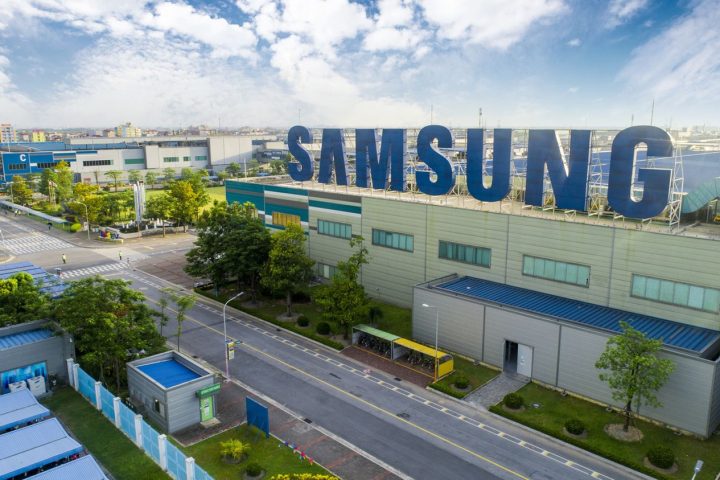


After nearly four decades of attracting foreign investment, Vietnam no longer lacks major foreign-invested enterprises (FDI). What it lacks are Vietnamese companies capable of moving deeper into the supply chains of those global corporations.
Perhaps that is why the most significant aspect of Resolution 10 is that, for the first time, the quality of foreign investment has been placed at the center of Vietnam’s FDI strategy, with highly specific targets. These include ensuring that 75% of newly registered FDI comes from developed economies, enabling around 10,000 Vietnamese enterprises to join the supply chains of FDI companies, and raising localization rates in key manufacturing industries to between 40% and 50%.
Naturally, the target of attracting an additional USD 200–300 billion in newly registered FDI during the 2026–2030 period remains highly important.
Yet one recurring theme stood out in the speeches delivered by FDI business leaders at the National Conference on the implementation of Resolution 10.
None of the representatives devoted much time to requesting additional tax incentives or more favorable investment policies.
Instead, they spoke about Vietnamese enterprises, supporting industries, capital markets, infrastructure, human resources, and institutional quality.
That alone suggests that Vietnam’s competition for foreign investment has entered a new phase.
Mr. Takuya Sahashi, Deputy President of Mitsubishi Corporation Vietnam, said Vietnam should no longer focus solely on attracting more foreign capital. More importantly, it should create conditions that enable domestic enterprises to participate more deeply in global value chains.
Only when Vietnamese companies become capable partners of multinational corporations can technology, management expertise, and global standards truly diffuse throughout the economy.
This also represents the biggest bottleneck after nearly four decades of FDI attraction. Vietnam has become a major manufacturing base for many global corporations, yet relatively few domestic companies have developed the capabilities to become first-tier suppliers. Many of the country’s key industries still depend heavily on imported components, materials, and equipment.
According to Mr. Sahashi, addressing this challenge requires Vietnam to simultaneously strengthen the capabilities of domestic suppliers, develop its materials and components industries, simplify support policies for small and medium-sized enterprises, and invest more heavily in vocational education and workforce development.
More importantly, rather than spreading support thinly across many firms, policymakers should identify enterprises with the greatest potential and provide focused assistance to help them become core suppliers.
If Vietnam truly aims to have 10,000 domestic enterprises participating in FDI supply chains, as envisioned in Resolution 10, this approach is likely to be far more effective than broad-based networking programs driven primarily by campaigns.
While Mitsubishi viewed the issue from the perspective of factories and supply chains, Dragon Capital and VinaCapital approached it from the perspective of capital flows.
Yet despite their different viewpoints, both arrived at the same conclusion: attracting high-quality FDI requires a high-quality investment environment.
Mr. Dominic Scriven, Chairman of Dragon Capital, said Resolution 10 sends a positive signal by affirming that the foreign-invested sector is an integral part of Vietnam’s economy.
In his view, the emphasis on the quality of investment, together with the commitment to equal treatment across all economic sectors, will strengthen the confidence of international investors.
However, Dragon Capital also pointed to an area requiring further improvement. The cost of capital for many Vietnamese businesses remains relatively high, reducing their competitiveness and making business expansion more expensive. To attract long-term investment, Vietnam needs a deeper, more transparent, and more efficient capital market.
Sharing a similar view, Mr. Michael Kokalari, Chief Economist at VinaCapital, noted that Vietnam does not lack the attention of international investors. What is missing are the conditions necessary for that capital to be effectively deployed.
In other words, Vietnam’s attractiveness in the coming years will be determined not only by investment incentives, but also by the quality of its infrastructure, capital markets, corporate governance, and the transparency of its business environment.
All three companies ultimately conveyed the same message to Vietnam. They were not asking for more incentives. They were asking for a stronger, higher-quality economy.
That is precisely the spirit of Resolution 10: shifting from competing through incentives to competing through the overall quality of the investment ecosystem.
After nearly four decades of economic opening, the more important question is no longer how many FDI projects Vietnam attracts, but how many domestic enterprises emerge stronger and grow alongside global corporations as a result of those investments.
If Resolution 10 succeeds in achieving that objective, its success will not be measured merely by hundreds of billions of dollars in registered FDI, but by the maturity and competitiveness of Vietnam’s own business sector.
Perhaps that is the most meaningful benchmark for evaluating an investment attraction policy in Vietnam’s next stage of development.